

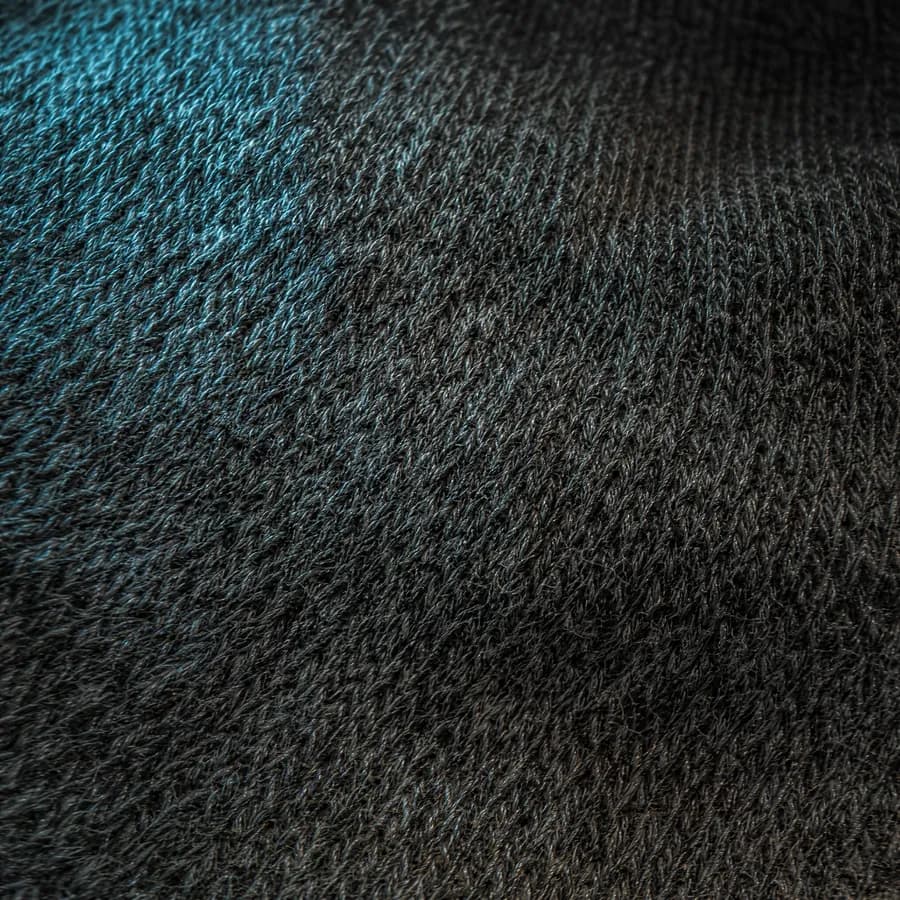
Translucency
Cushioning
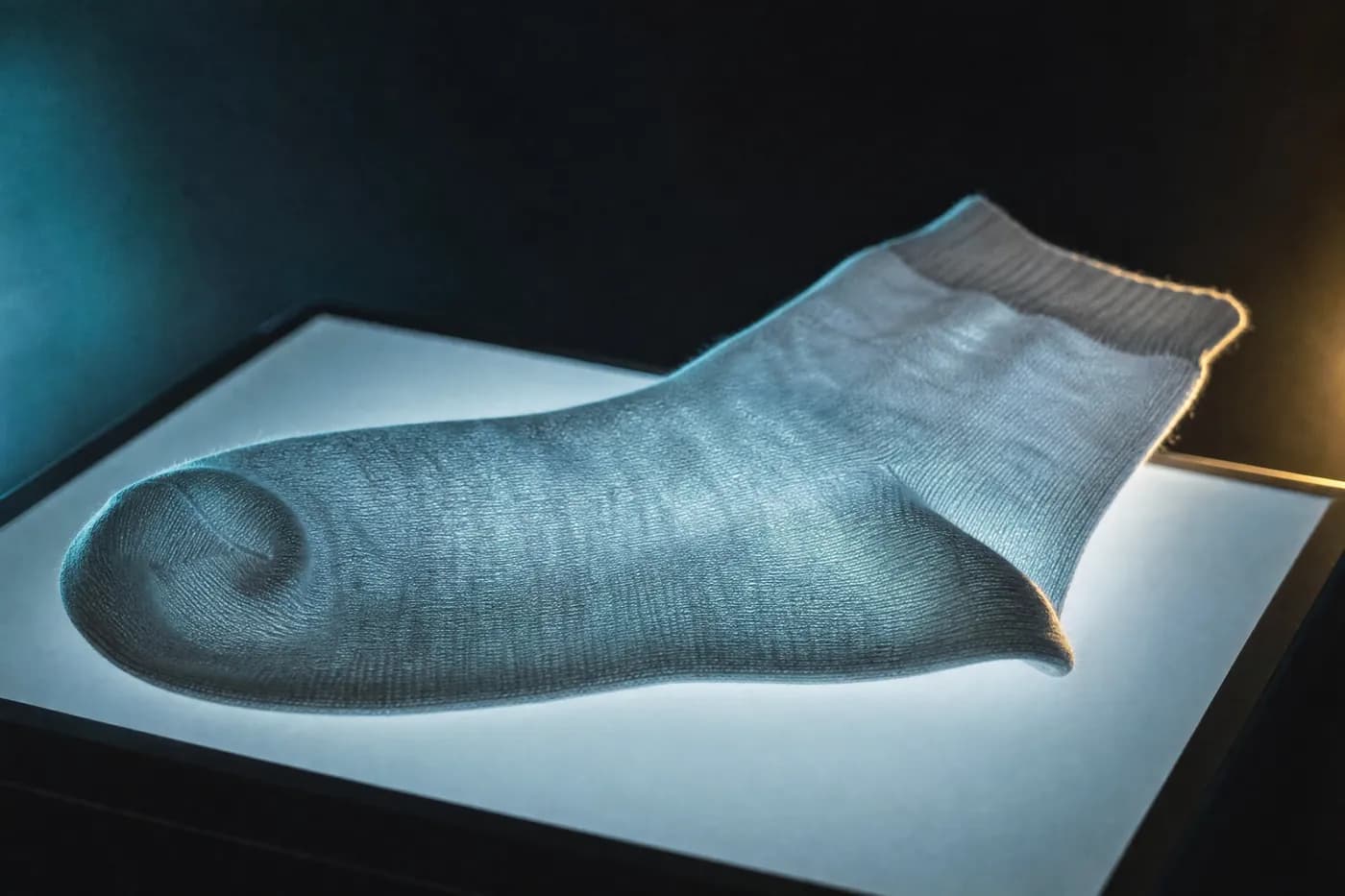
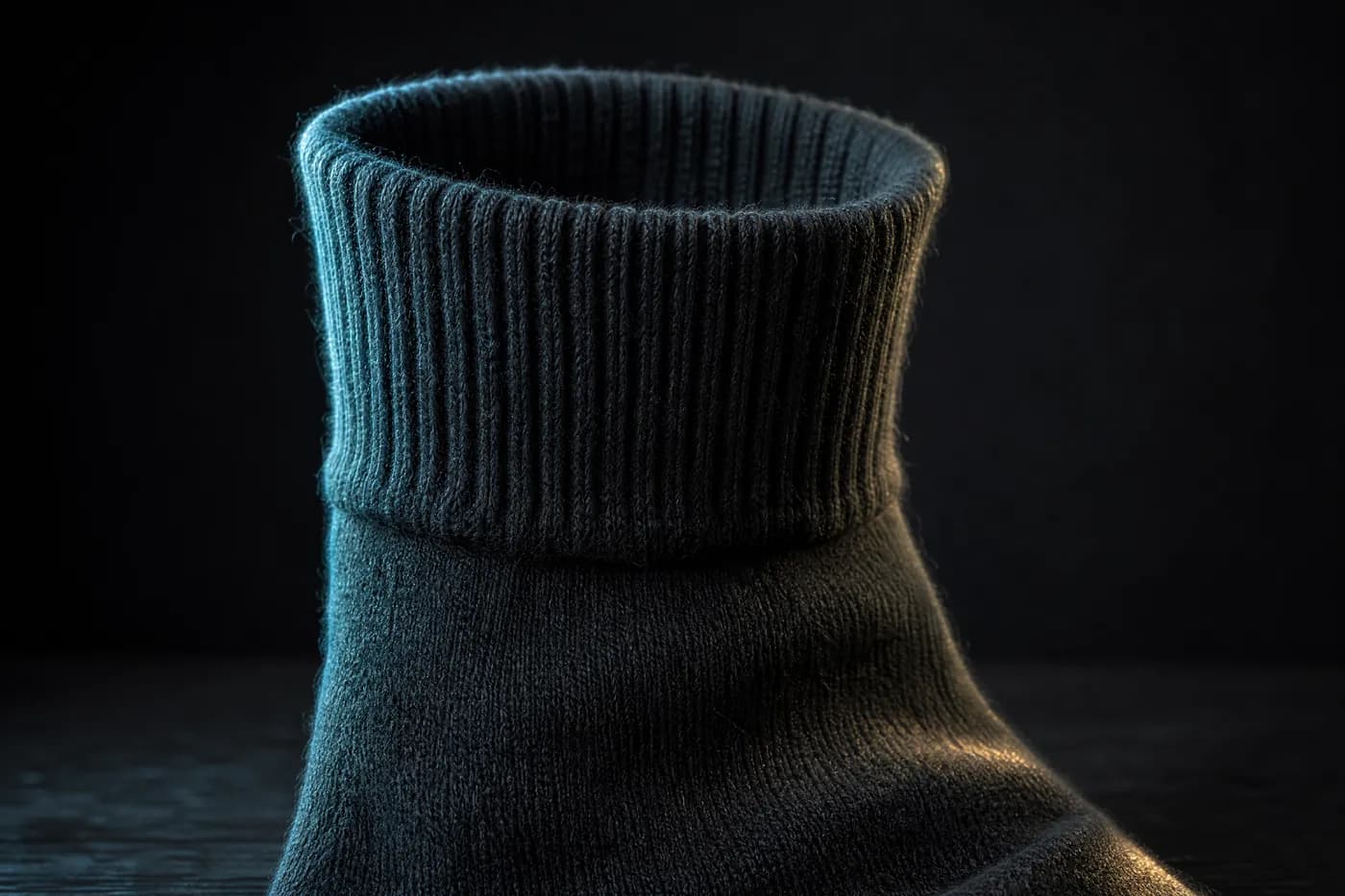
Held against light, a heel that has lost its pile passes more of it. That is the most direct thing a photograph can say about how much loft is left.
This pair
Remaining-life read-out
Socks don’t fail suddenly. Long before anything tears, a pair has already stopped doing the four things it was made to do — and most people keep wearing it for months after that, because it hasn’t got a hole in it yet.
Photograph a pair. Get how much cushioning, surface, cuff grip and moisture handling is left, which one went first, roughly how many wears remain, and — the part nobody else will tell you — which signs of age don’t actually matter.
Free tier, no card. 5 pairs a month.
One pair · four read-outs
no hole present
Where each one stops working
Every one of the four stops doing its job long before anything tears. By the time a hole shows up, the pair had already stopped working — usually months earlier.
The standard everyone uses is the wrong one
Most people throw a pair away when it tears. By then it had stopped cushioning anything a long while back, the top had been sliding down for weeks, and the fabric had quietly stopped taking up moisture. The tear is just the moment the failure becomes impossible to ignore.
It runs the other way too. Plenty of pairs look thoroughly finished — grey, fuzzy, pilled all over — and have almost everything left. Fuzz is on the surface. What matters is underneath it.
So the useful question is not is it broken. It is how much is left, and in which of the four.
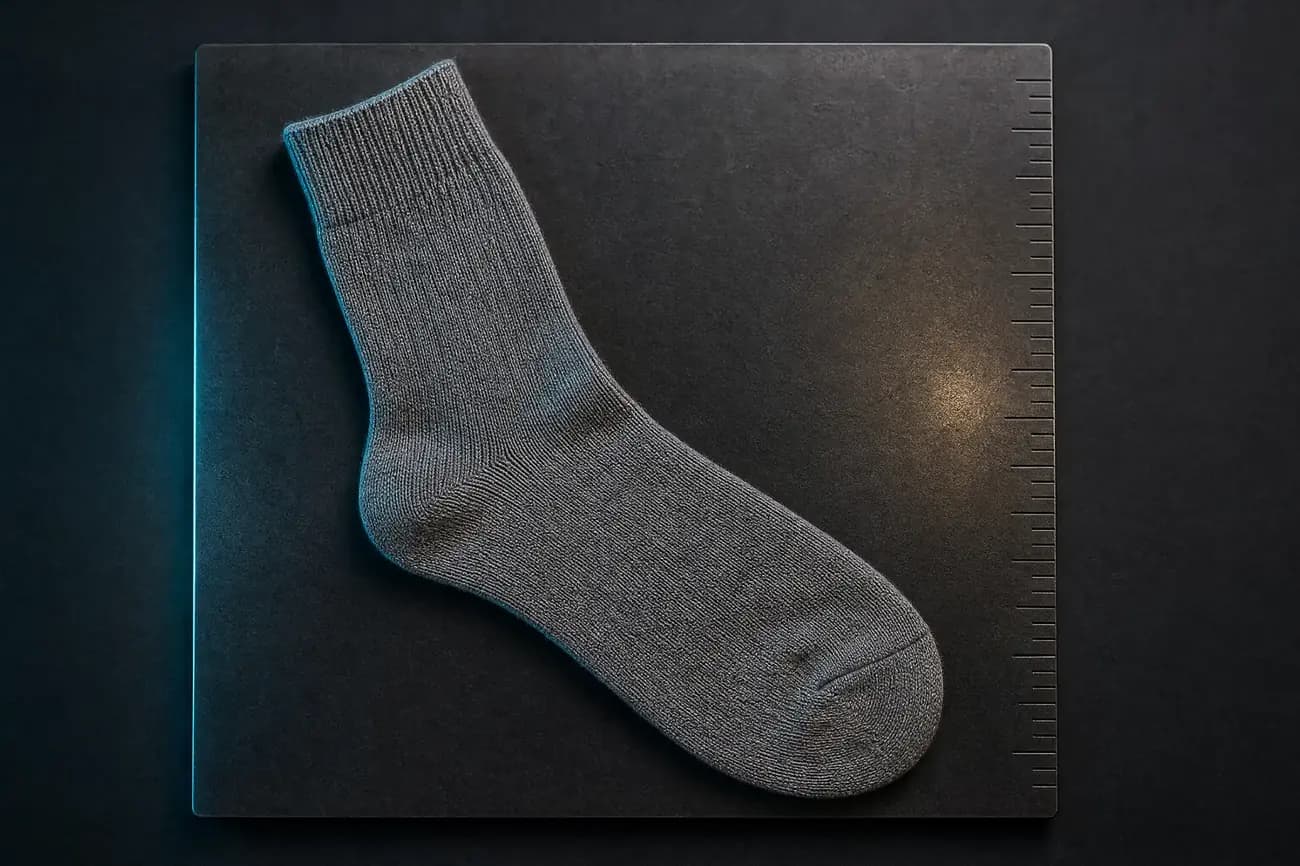
What the two photographs carry
No photographs of feet. There is no upload facility for one anywhere in this service.
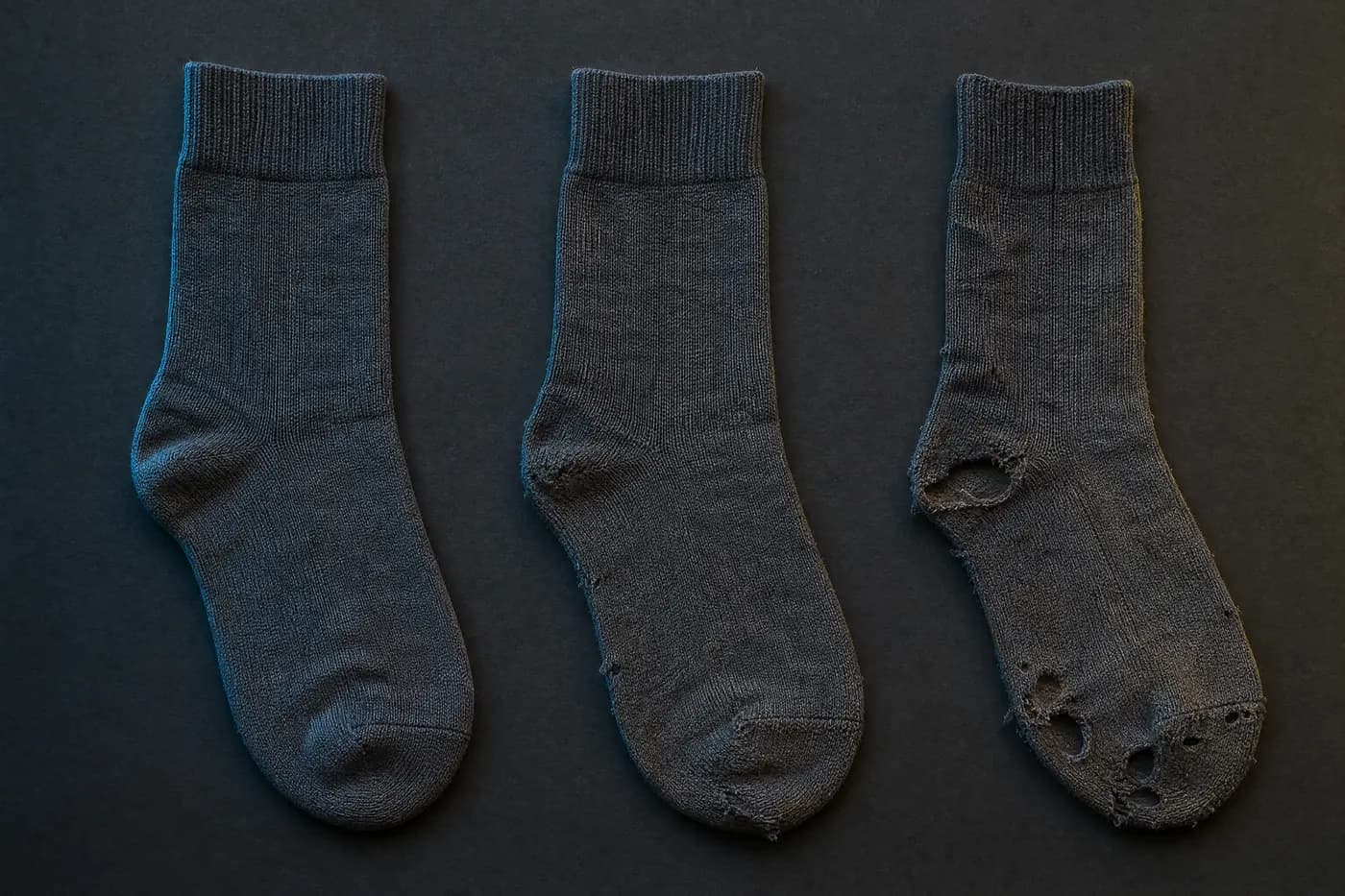
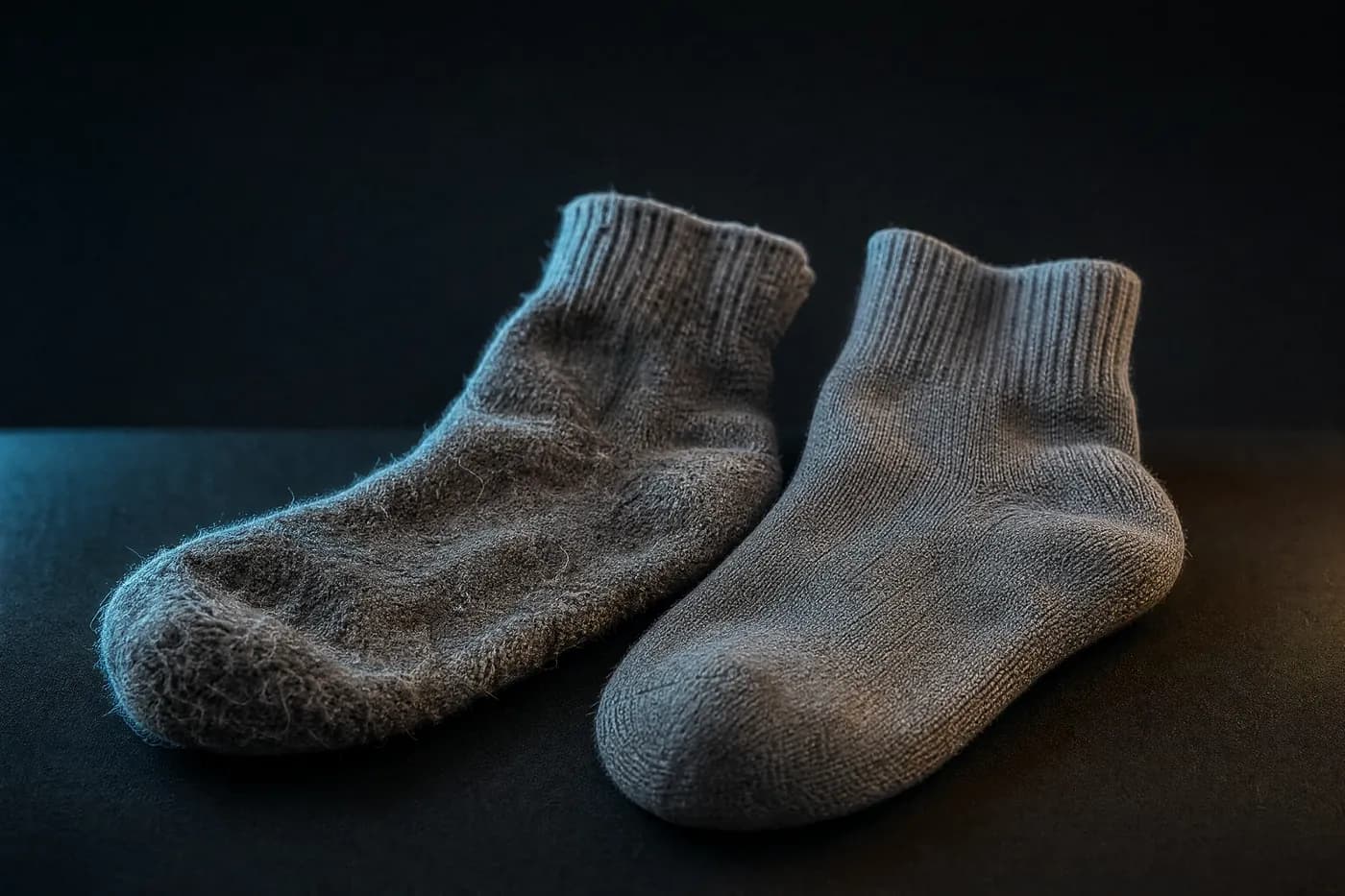
Left to right: a pair with most of its life ahead of it, one that has already lost its cushioning and its cuff, and one that has finally torn. The interesting part of that sequence is the middle, and it is the part nobody has a word for.
Four functions, four different clocks
The image model’s only job is to read these four indicators off the photographs. The arithmetic that turns them into remaining life runs in your browser, so the same pair always reads the same way.
Translucency
Held against light, a heel that has lost its pile passes more of it. That is the most direct thing a photograph can say about how much loft is left.
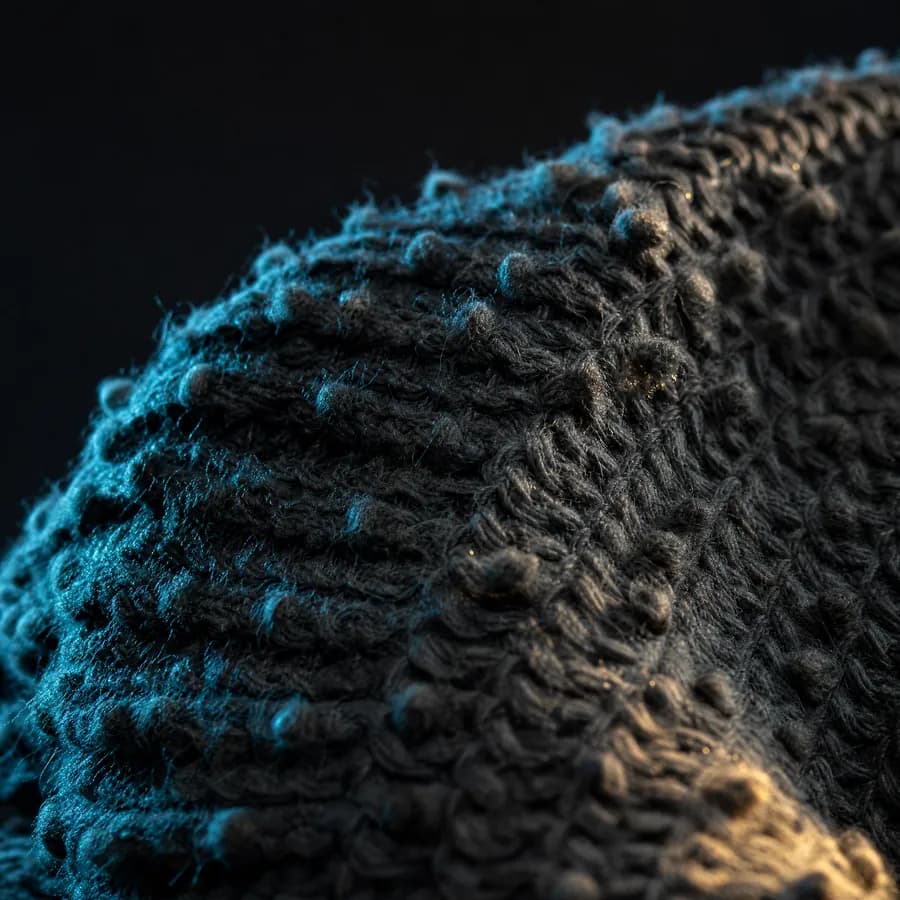
Bobble density and matting
Two different things get called “worn out”. Bobbling sits on top and changes nothing. Matting is the loops themselves collapsing into a plateau, and that is structural.
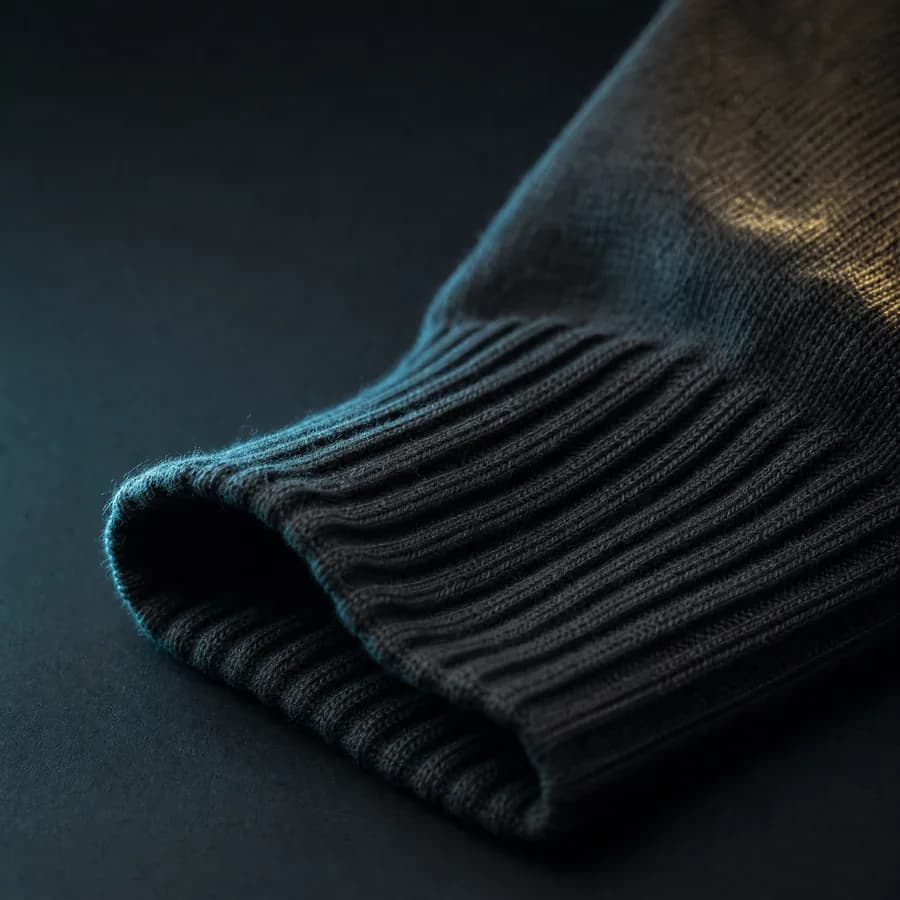
Rib opening at rest
A cuff that has given up sits open with nothing inside it. How far open, photographed flat and unstretched, is a usable measure of how much recovery is left.
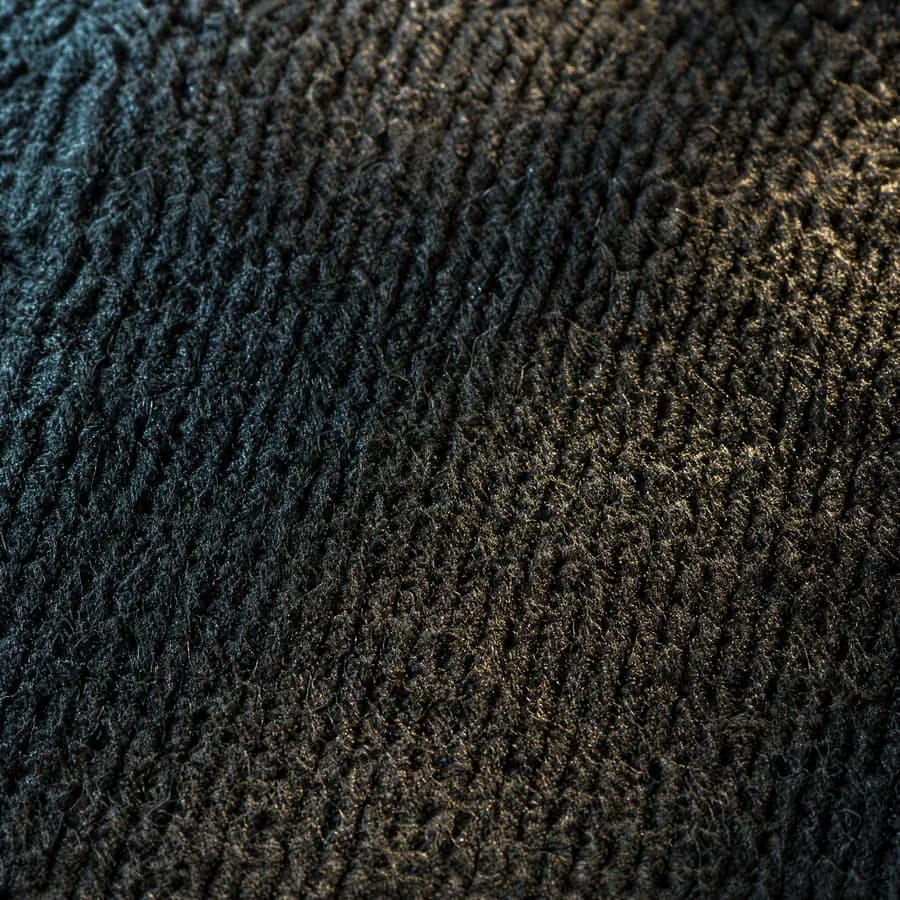
Surface sealing and sheen
Detergent residue and body oils gradually close the fibre surface. It shows up as a faint glaze across the bed, and it is the function people notice last.
The column nobody else prints
A tool that only ever says throw it out creates waste. Half the value of a read-out is the other half: the things about a pair that look bad and change nothing about what’s left in it.
Every read-out carries this section, on every plan, and it is never covered by the free-tier watermark.
The bobbling looks bad but the fabric under it is intact. On these, surface fuzz is cosmetic — nothing about it shortens what’s left.
The heel reads thinner than the rest against the light. That is where the pile packs down first on every pair, and there is still measurable loft there.
The colour has gone flat and uneven from washing. Dye behaviour and fibre structure are unrelated; this pair has lost none of its cuff grip.
Shown in gold throughout, at the same visual weight as the degradation bars. It is not a footnote.
And the other direction
A cushioning layer that has flattened completely is doing nothing. A cuff that needs pulling up three times a day is not going to recover. A surface that has matted enough to change how it moves inside the shoe has changed for good.
Every read-out states the conditions, specific to that pair, under which it should be retired regardless of whether it has torn.
What a read-out never says is what to replace it with. This service evaluates no brand, reaches no conclusion about any product’s quality, and gives no purchasing advice of any kind.
Wearing it is close to wearing none.
Needs pulling up more than twice a day.
Friction against the shoe has changed.
Not a degradation curve. Retire immediately.
Three steps
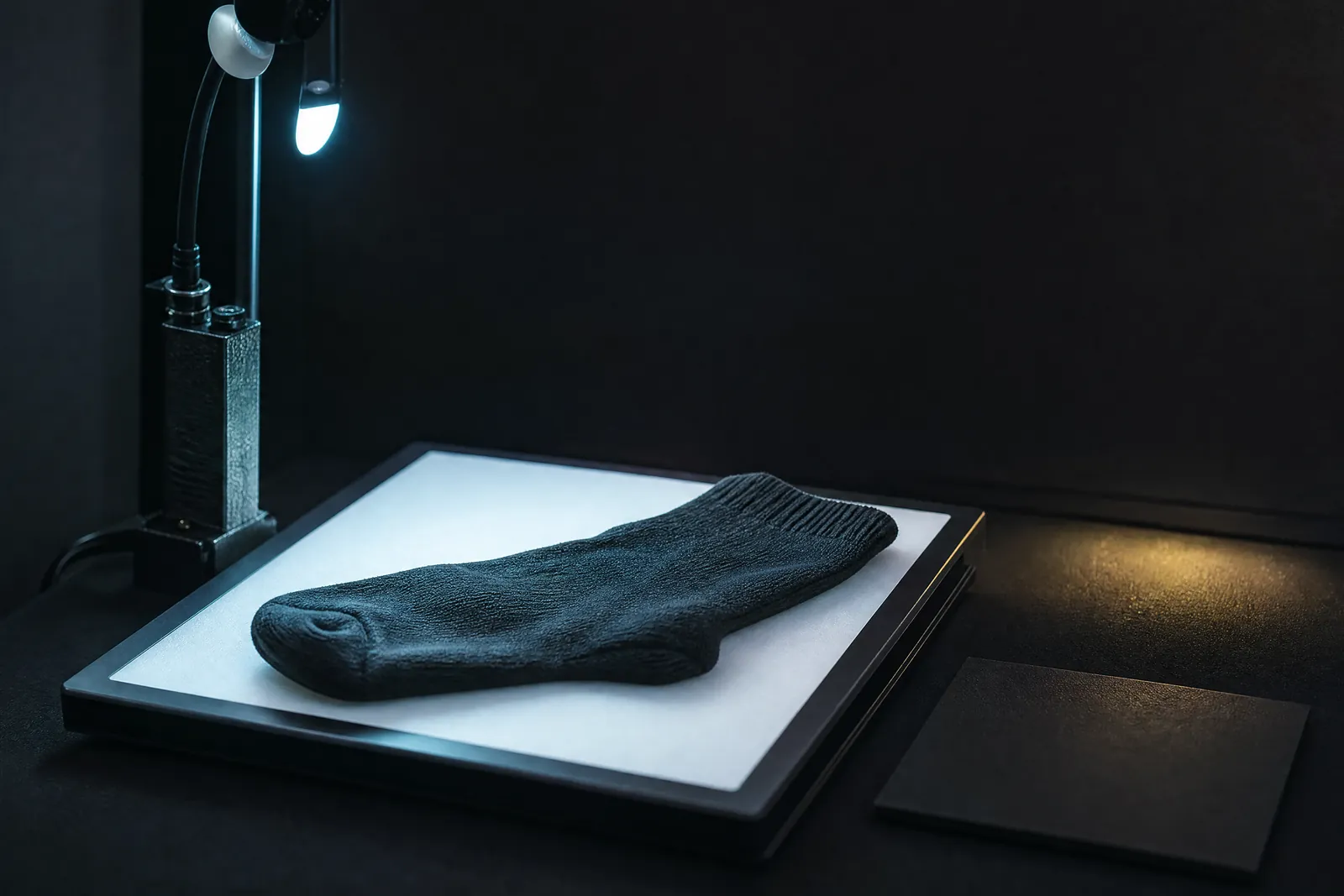
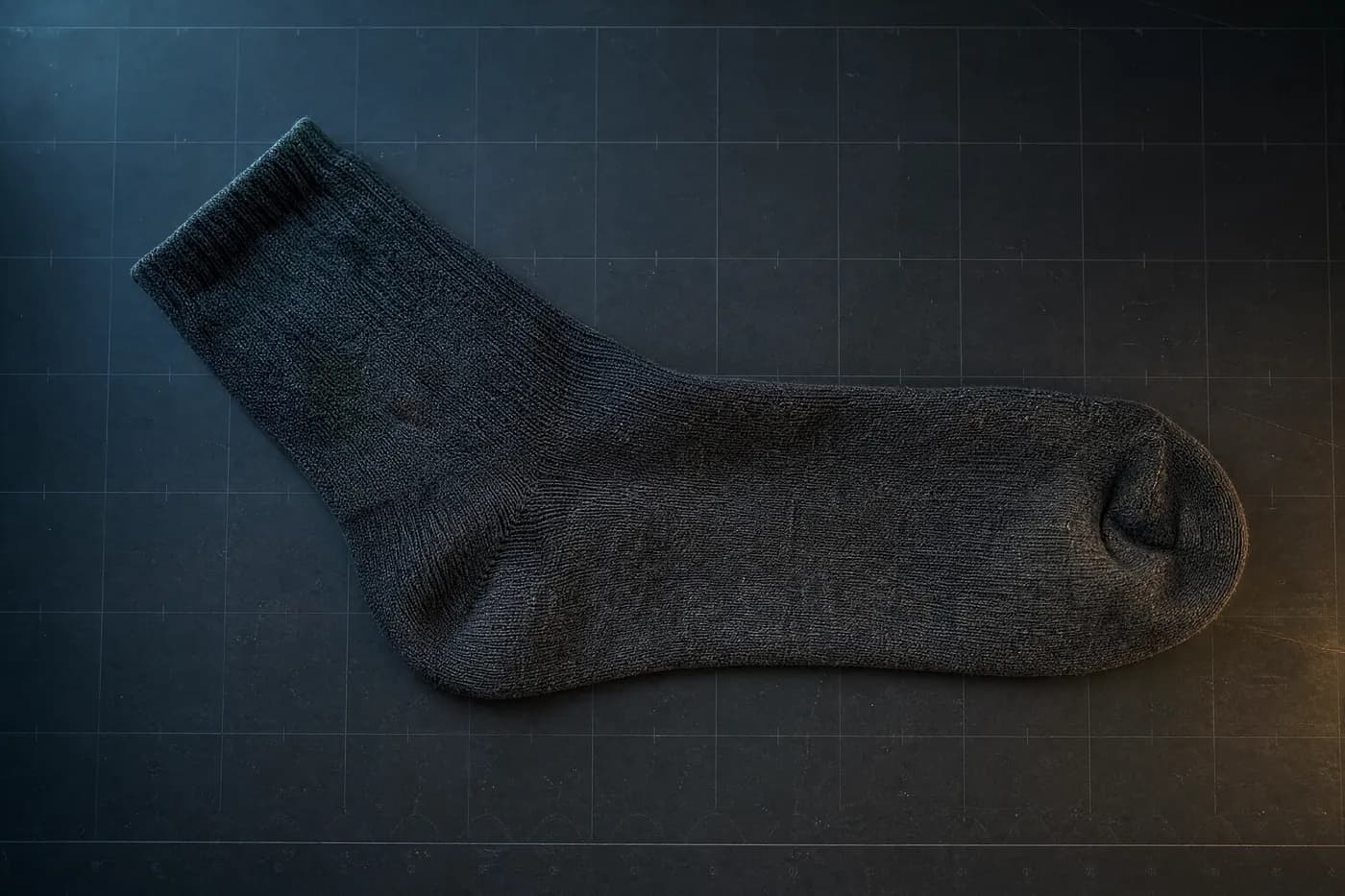
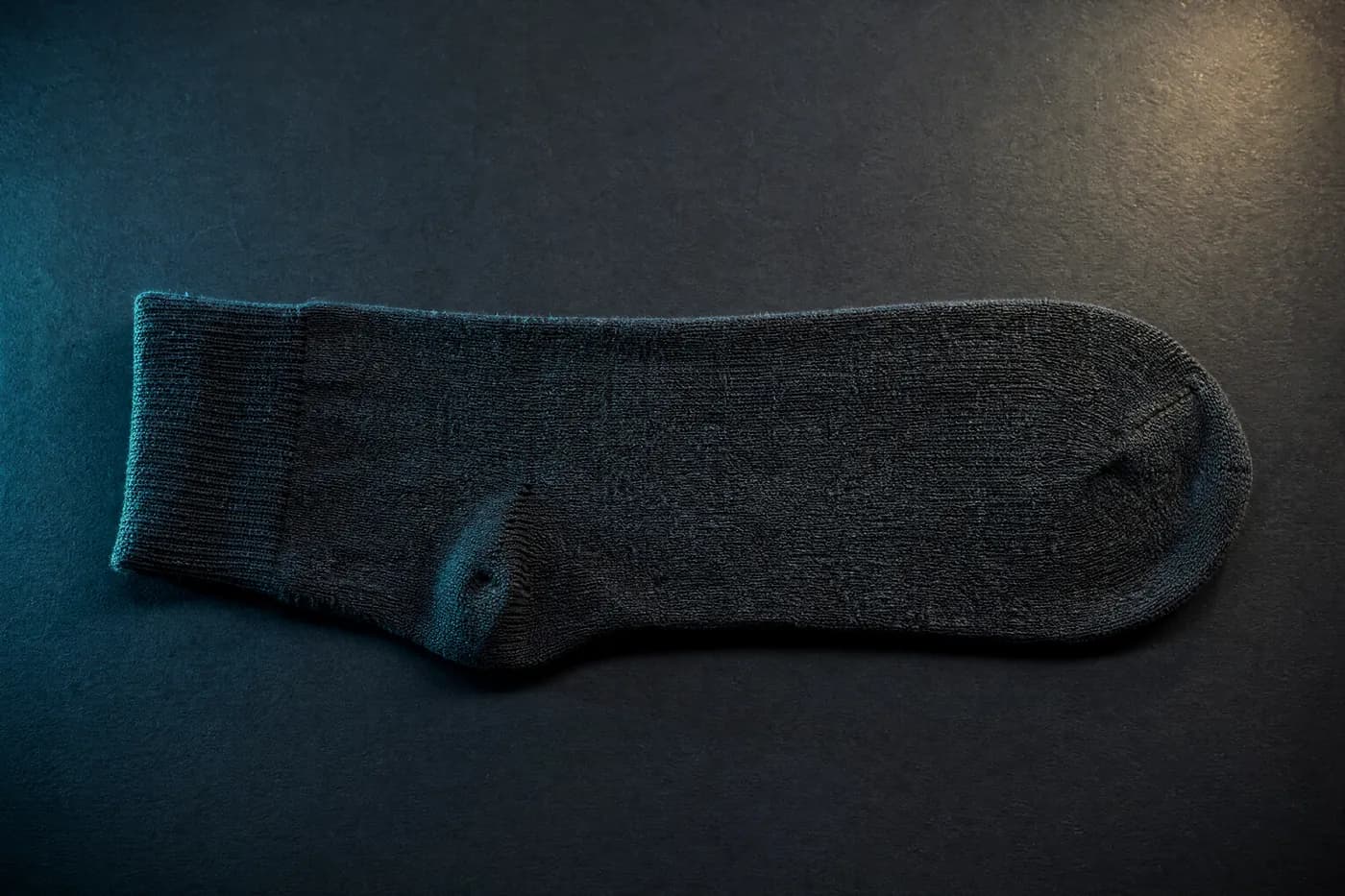
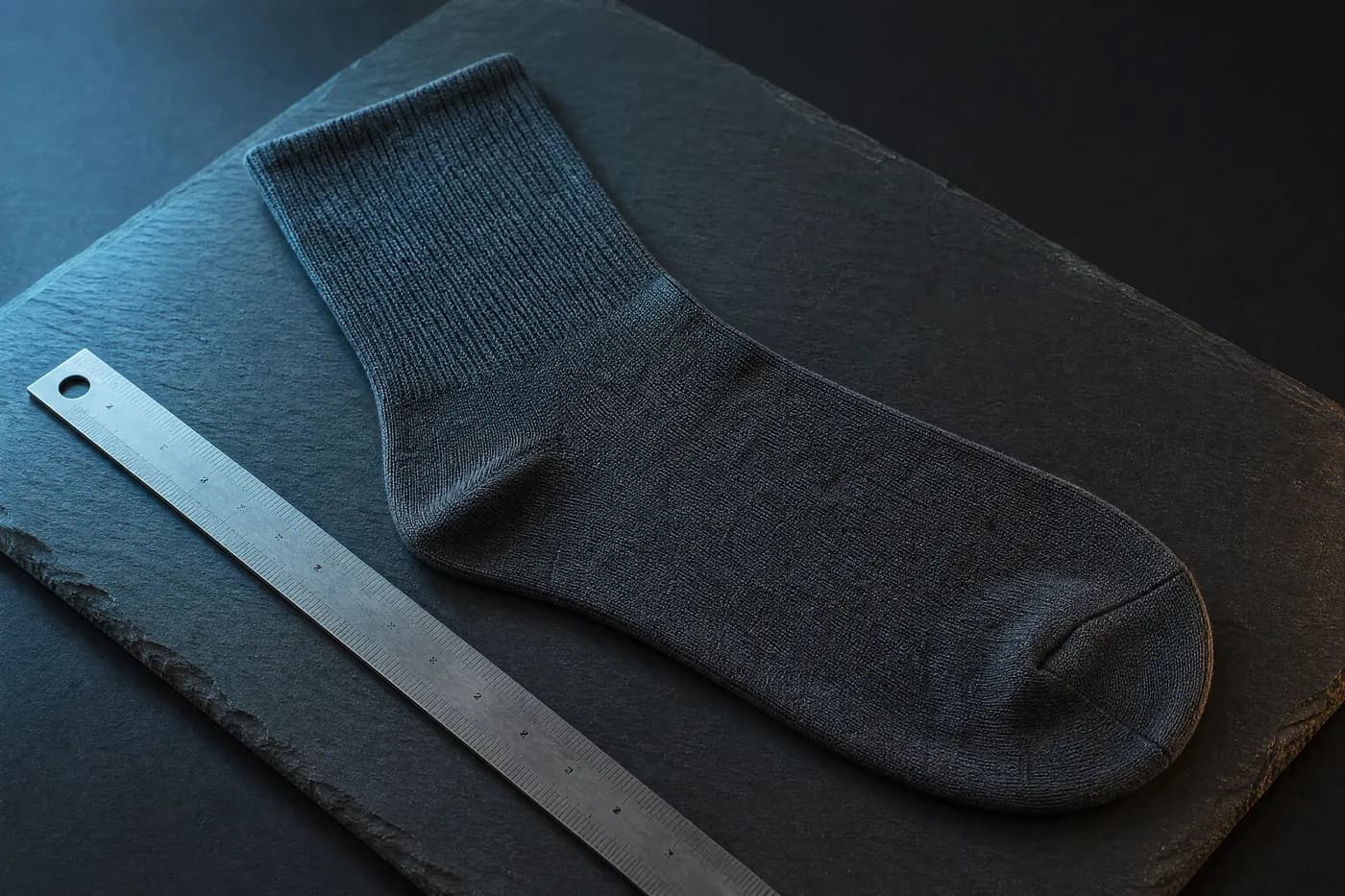
Two frames: the whole sock laid flat, and a close one of the heel and toe. Backlight helps but is not required. Then say roughly how many times it has been worn — a guess is fine, and the range widens to account for it.
Four bars, four different lengths, and the one that runs out first named. A single overall score would hide the only thing worth knowing, which is which function is the binding one.
A range of wears left, the conditions under which this pair should be retired even without a hole, and — just as prominently — the things about it that look bad and are not.
What goes in
Any maker’s mark the model reads is covered before it reaches a card, a shared image or a link preview. Nothing here shows a foot, and nothing identifies a brand.
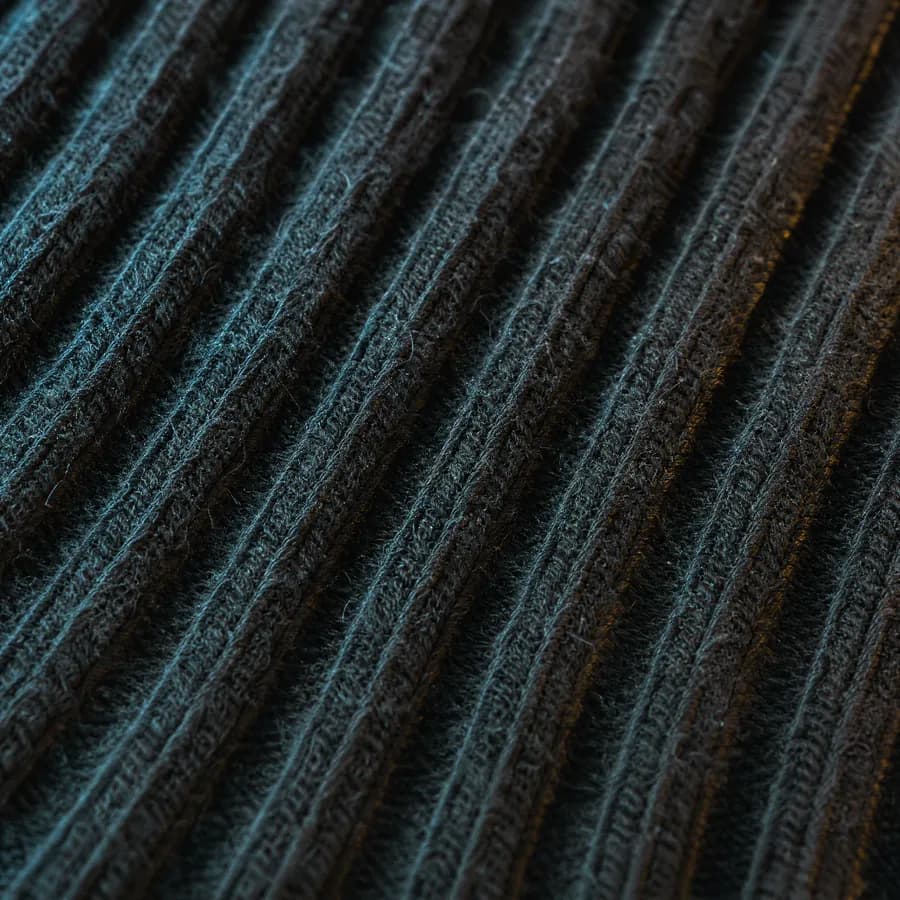
One pair is not the real case
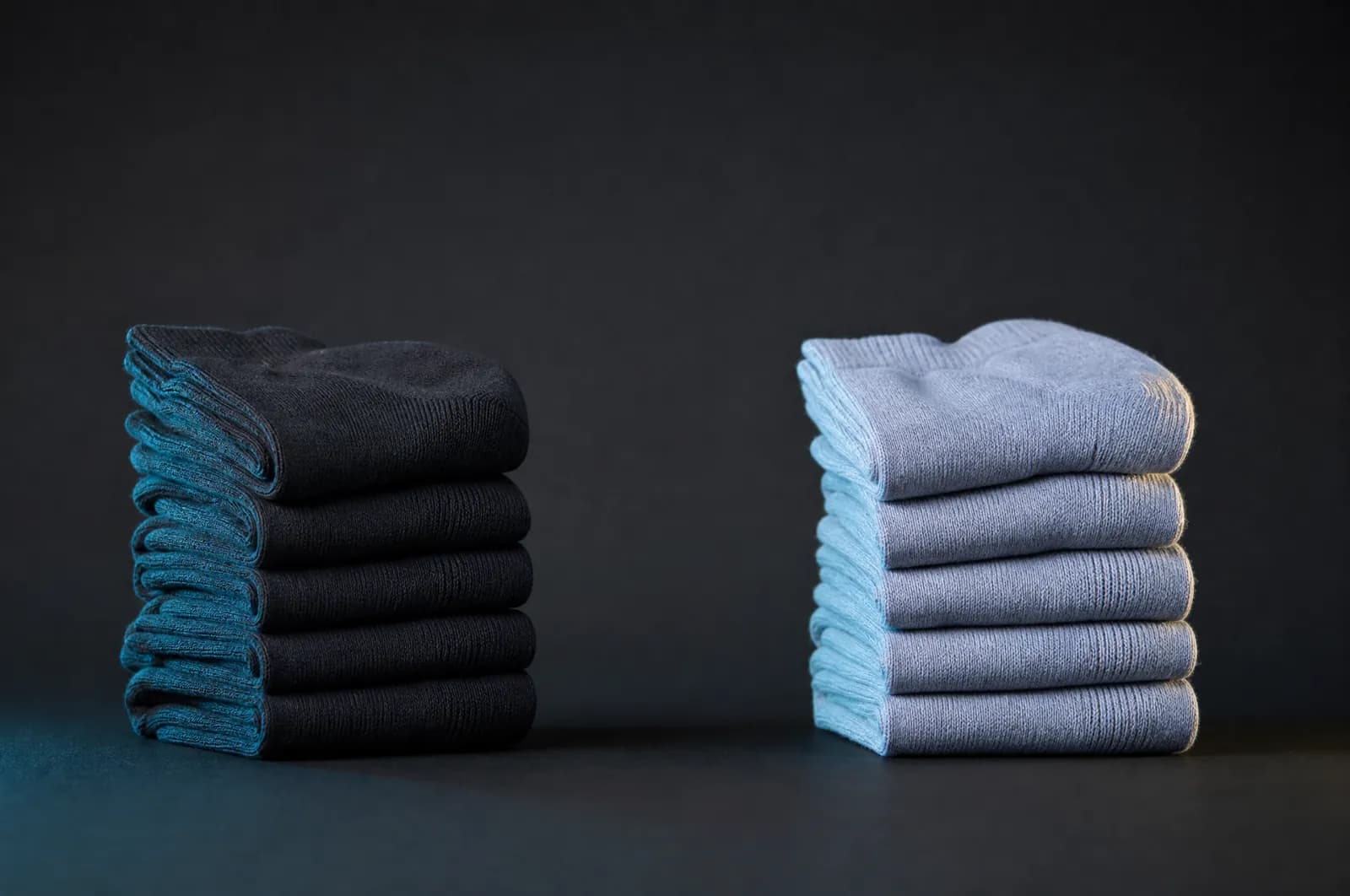
People wonder about a drawer. Twenty pairs, half of them fine, several past it, and no way to tell which is which without putting each one against the light.
Batch assessment reads a whole drawer in one pass and gives you two piles and a queue: what stays, what comes out now, and what to look at again in a month.
What batches need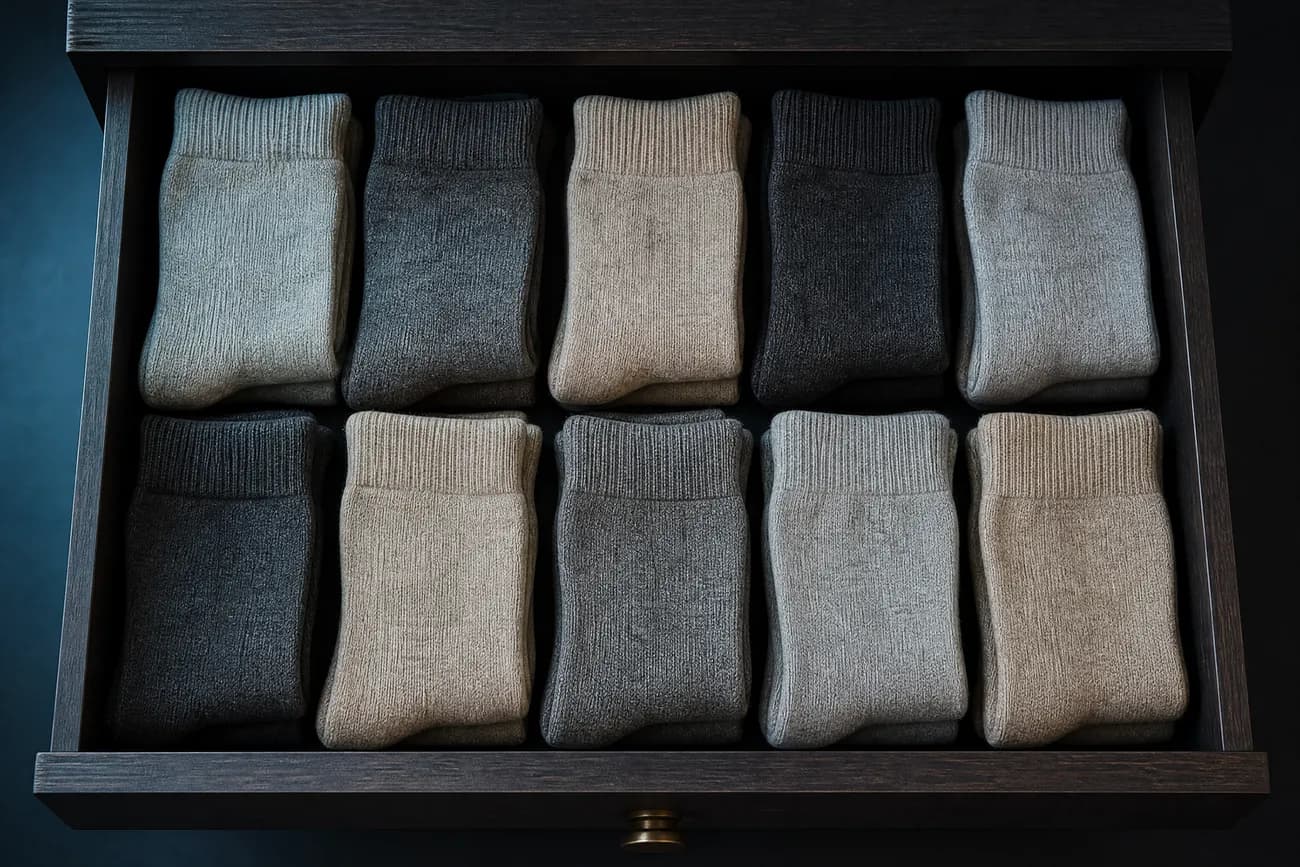
Before
Twenty pairs, one question, no answer.
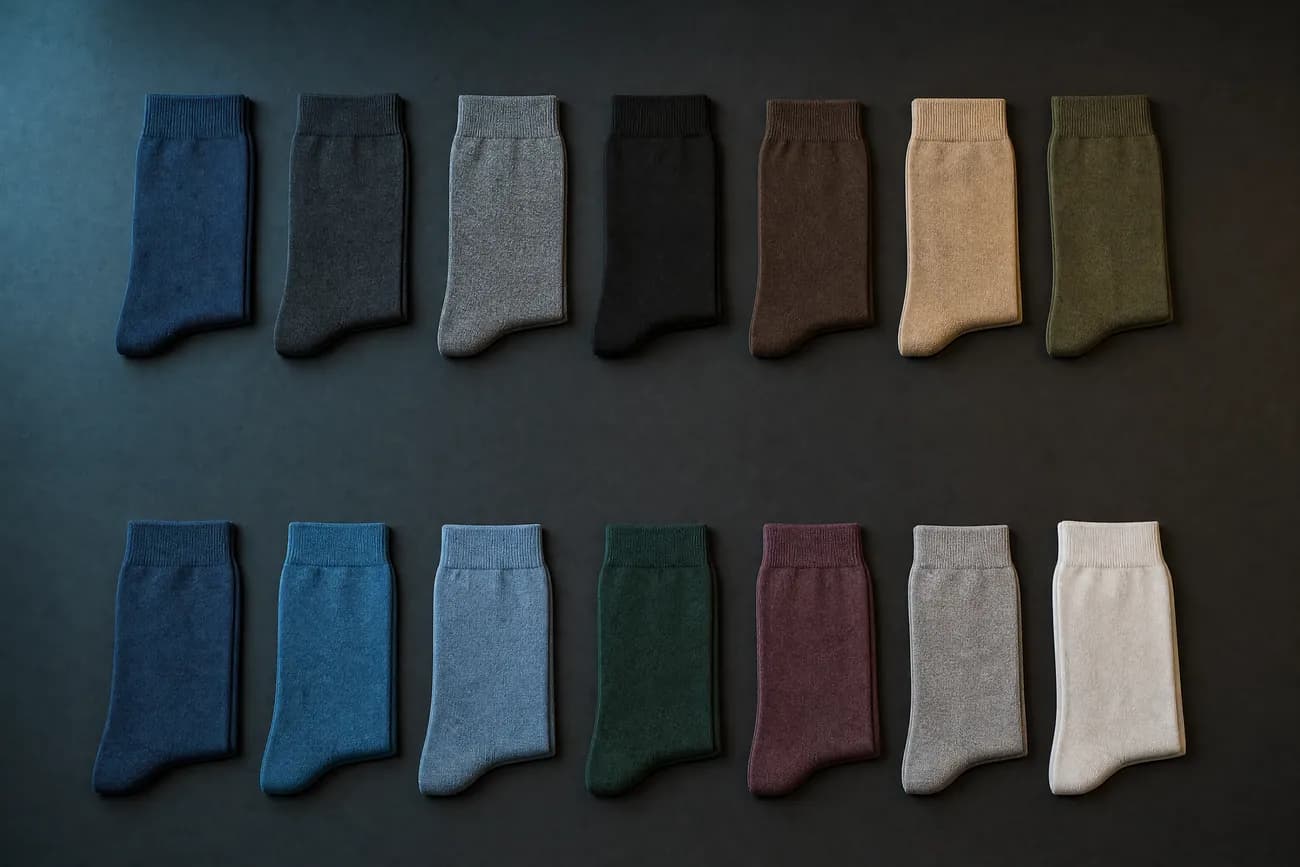
After
Two rows and a queue. Most of them stay.
Plans
The free tier gives you a range of wears left. That is genuinely all it gives, and a total on its own won’t tell you what to do with a pair.
What decides it is the split — cushioning gone but cuff grip fine means this pair is finished for long days and still perfectly good around the house. That split is what the paid tiers unlock.
Compare the plansAll prices include VAT at 20%.
Questions
Anything not covered here, write to support@drewbradyco.shop or call +44 1204 854800.
No. What you upload is used to produce your read-out and nothing else. It is never used to train, fine-tune or evaluate any model, and it is never sold or shared for advertising.
Photographs are held for 30 days so you can reopen a read-out, then deleted automatically. You can delete any pair, or your whole account and everything in it, at any time from your account page — deletion is immediate and irreversible, and takes effect in backups within 30 days. The detail is in the privacy notice.
We do not accept photographs of feet, and there is no upload facility for one anywhere in this service.
The one that looks past it but hasn’t torn. That is exactly the case the four bars were built for, and the free tier will give you a range for it without a card.

